Pyrolysis of Forestry Biomass Waste Enables Biochar Carbon Removal
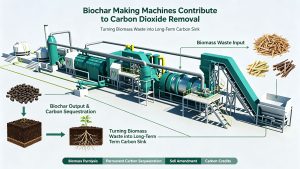
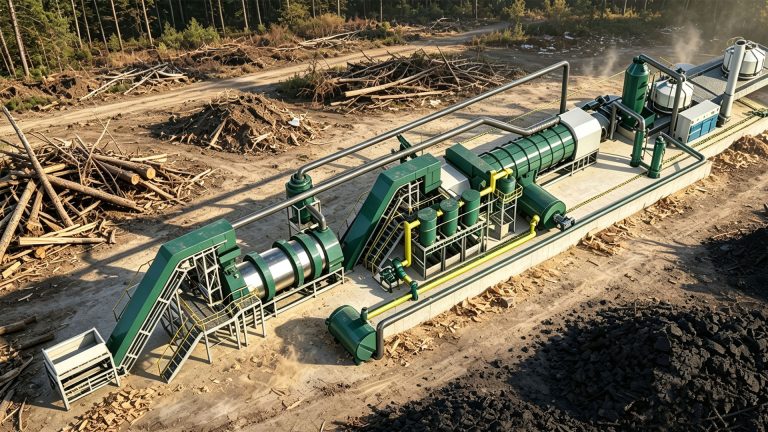
Biochar production from forestry biomass waste pyrolysis is one of the few negative carbon technologies. It combines four key benefits: waste management, ecological restoration, permanent carbon removal, and market-based income generation. Pyrolysis of forestry biomass waste to biochar perfectly aligns with global trends in ecological governance and carbon-neutral industry development.
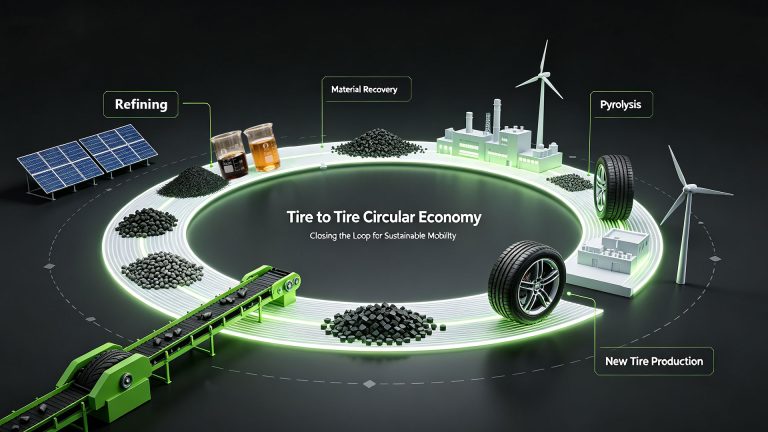
How to Achieve Tire to Tire Circular Economy?
Tire to Tire circular economy offers a transformative alternative, turning waste tires into raw materials for future tires. Realizing a tire-to-tire circular economy is based on a closed-loop recycling strategy built upon pyrolysis technology and collaboration within the tire manufacturing industry. The Tire to Tire circular economy constructs a closed-loop
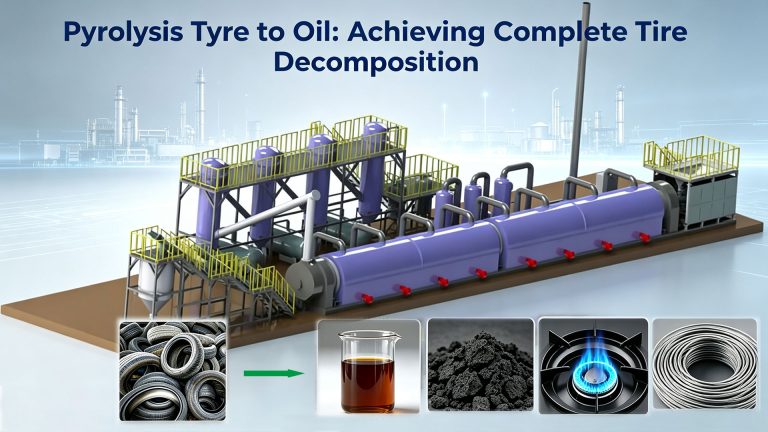
Pyrolysis Tyre to Oil: Achieving Complete Tire Decomposition
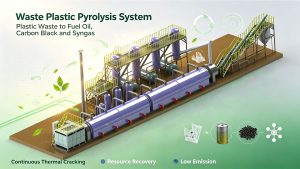
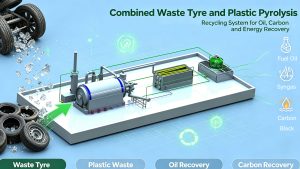
Tyre pyrolysis involves the thermal decomposition of end-of-life tires in an anaerobic environment, producing pyrolysis oil, combustible gases, carbon black, and steel wire. Pyrolysis Tyre to oil is the most technically complex of standard recycling methods, requiring significant capital investment and specialized operational skills. However, it is the only method
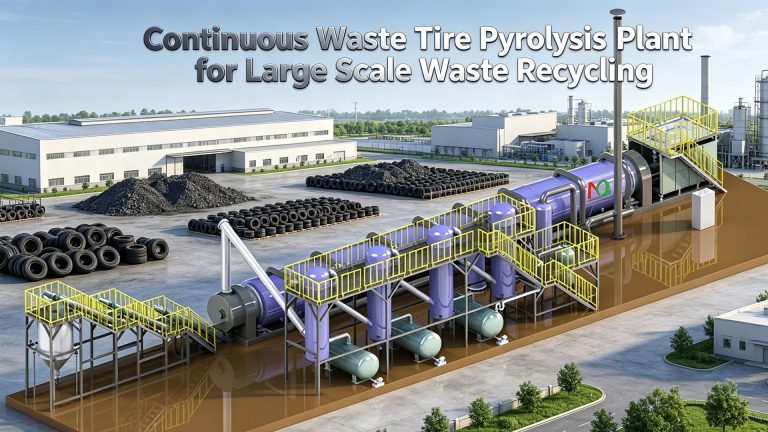
Continuous Waste Tire Pyrolysis Plant for Large Scale Waste Recycling
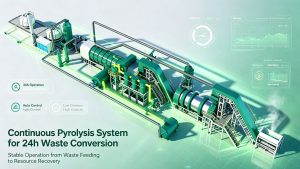
The global tire pyrolysis industry is gradually developing towards higher efficiency, environmental protection, and higher value. Continuous pyrolysis technology, with its closed-loop continuous feeding-pyrolysis-discharge process, is becoming the mainstream approach for large-scale tire recycling projects worldwide. The fully continuous waste tire pyrolysis plant is becoming the core equipment for the
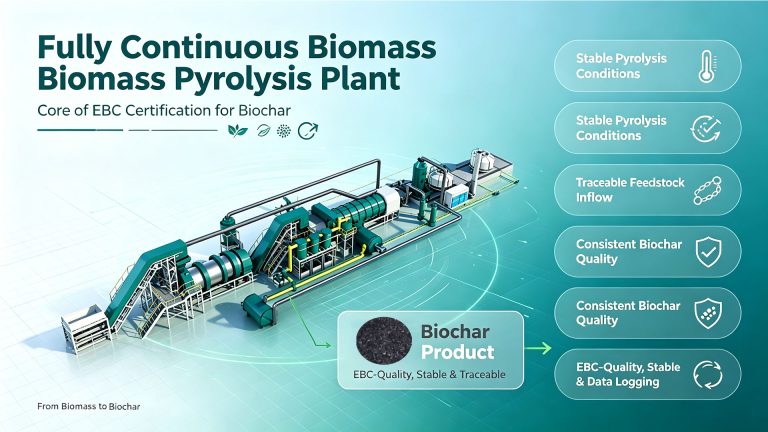
Fully Continuous Biomass Pyrolysis Plant – Core of EBC
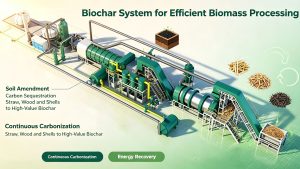
The core of EBC certification is its stringent requirements for consistent biochar quality and production traceability. Fully continuous biomass pyrolysis plant, with the stable and controllable continuous biochar production, serves as an indispensable hardware foundation for enterprises to achieve compliant mass production of high-quality, certified biochar. It provides the technical
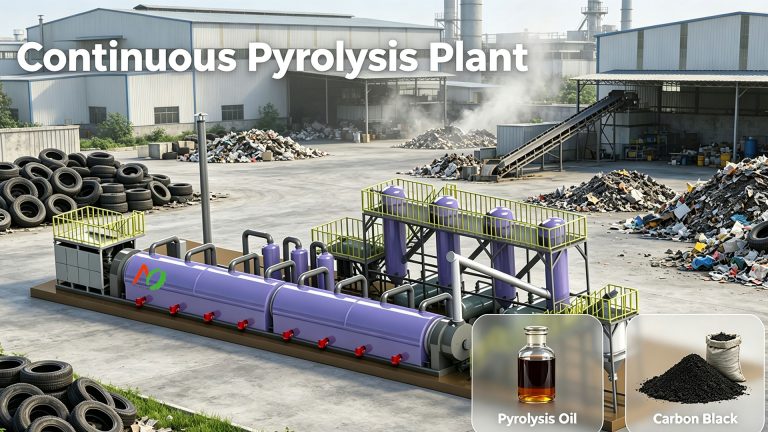
Pyrolysis Oil ISCC Certification: A Key Passport from Waste to Circular Economy
Waste tire/waste plastic pyrolysis oil has opened a gateway from waste to circular economy. Pyrolysis oil with ISCC certification is no longer merely a waste conversion product. It is a compliant raw material capable of entering high-value international markets and participating in carbon emission reduction trading. Pyrolysis oil, produced through

How to Obtain Biochar from Rice Straw
Pyrolysis is a key technology for obtaining biochar from rice straw. Mingjie Biomass Carbonization Plant produces high-quality biochar and syngas products through a continuous pyrolysis carbonization process. Rice straw biochar is a carbon-rich aromatic compound produced by the pyrolysis of rice straw under anaerobic or limited oxygen conditions. It possesses
What Are the Global Biochar Standards?
The global biochar standardization system is gradually moving towards convergence and harmonization. Biochar standards primarily comprise internationally recognized standards, regional standards, national standards, and carbon credit certification standards. Currently, the leading international biochar standards are the World Biochar Certificate (WBC) and the European Biochar Certificate (EBC). These are the two
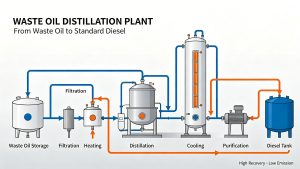
Waste Plastic Tire Pyrolysis Oil Distillation To Diesel Affects Fuel Market
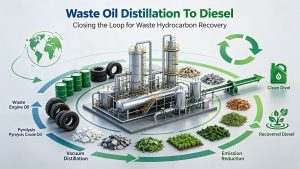
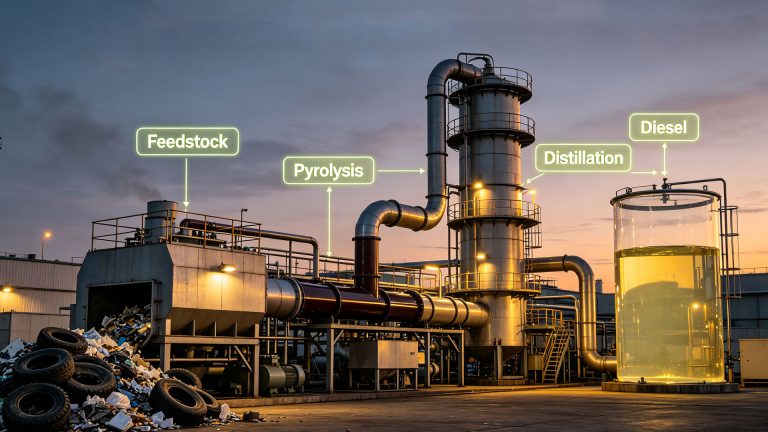
The pyrolysis oil distillation to diesel is establishing a new fuel supply channel independent of traditional crude oil refining. Pyrolysis oil is derived from organic solid wastes such as waste tires, scrap plastics, and industrial oil sludge. Its calorific value closely approximates that of crude oil and standard diesel. However,
What Can Old Tires Be Recycled Into?
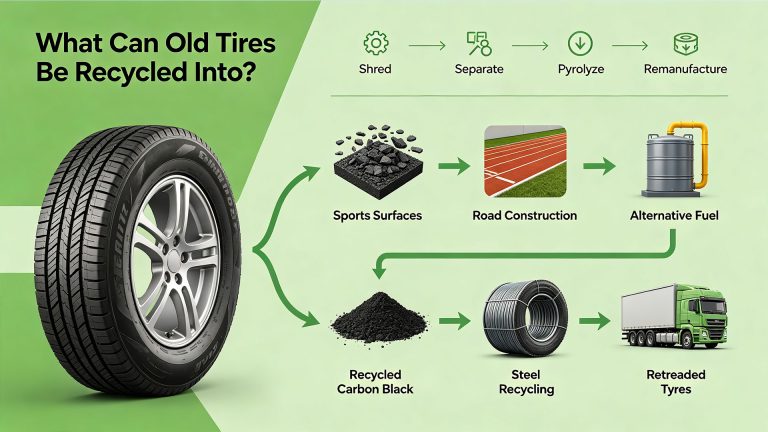
Every year, hundreds of millions of tons of car tires worldwide reach their end-of-life. These high-molecular-weight rubber products take hundreds of years to naturally degrade, and indiscriminate dumping leads to black pollution. However, waste tires are a high-value recyclable resource. What can old tires be recycled into? Through various technologies