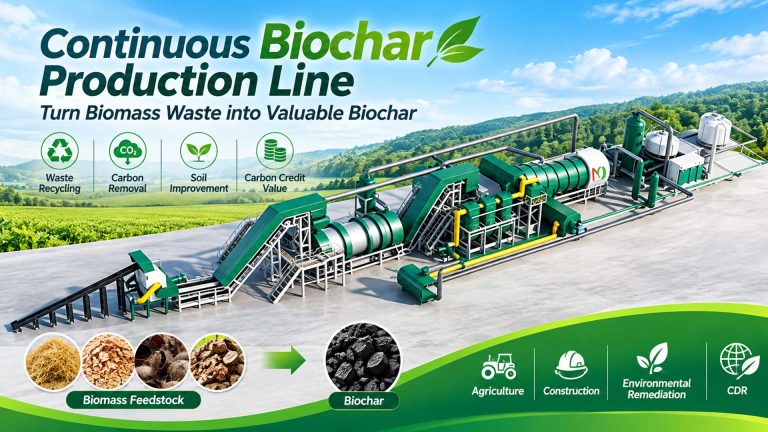
What Defines a Mature Continuous Biochar Production Line?
A mature continuous biochar production line must possess six core capabilities: stable feedstock intake, thorough carbonization, energy recycling, continuous discharge, environmental compliance, and intelligent control. These six modules are critical focal points for project evaluation, equipment selection, operational management, and carbon certification verification. Key Aspects of a Mature Continuous Biochar
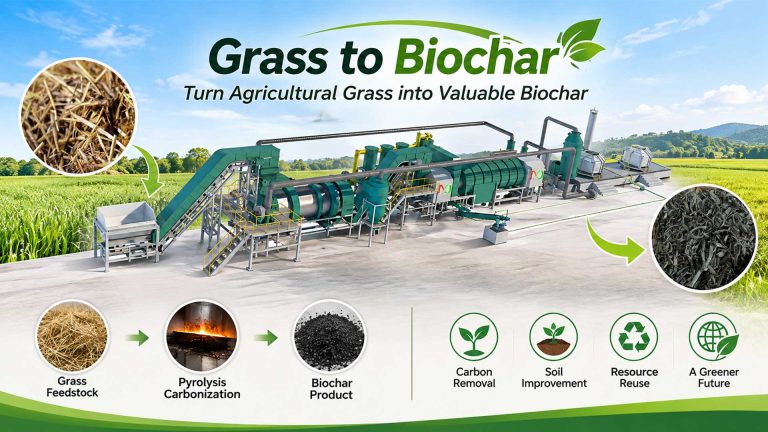
Is It Feasible to Use Grass for Biochar Production?
Many people wonder whether herbaceous biomass, such as crop straw, weeds, and forage grasses, can be turned into biochar. The answer is Yes. Grass is an excellent feedstock for biochar production through a process known as controlled-oxygen pyrolysis. Materials like weeds, rice straw, wheat straw, reeds, and forage grasses can
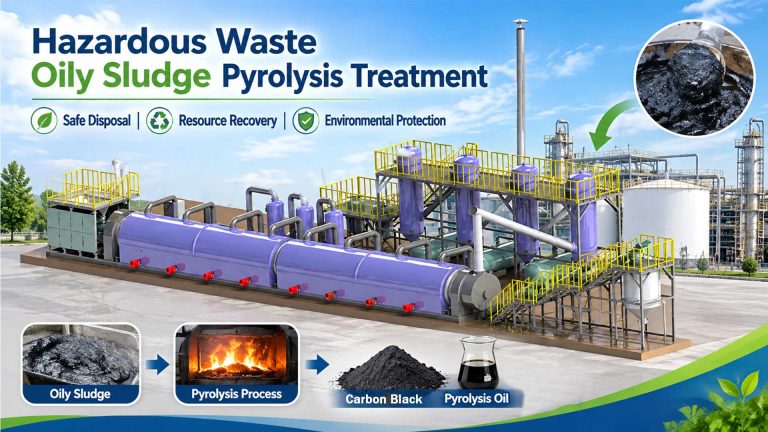
Why Choose Oily Sludge Pyrolysis Treatment?
Unlike incineration, which completely destroys the resource value, oily sludge pyrolysis achieves both harmless treatment and resource recovery. Hazardous oily sludge presents a dual challenge: it is environmentally hazardous, yet rich in recoverable hydrocarbons. Pyrolysis technology has emerged as a viable hazardous waste treatment method. Operating in an oxygen-free environment,
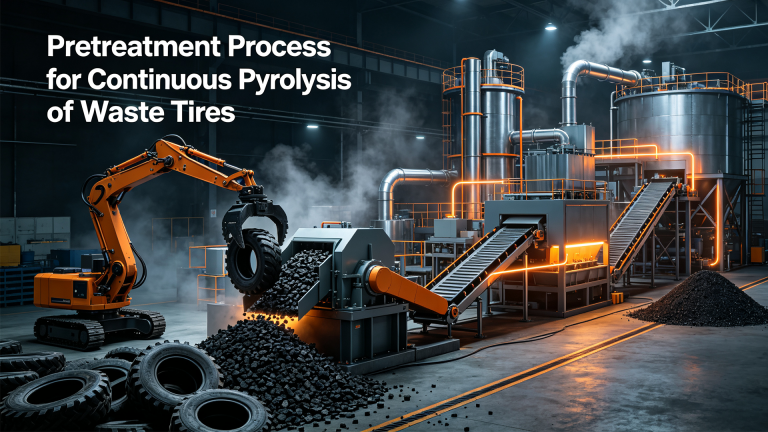
Pretreatment Process for Continuous Pyrolysis of Waste Tires
Compared to traditional batch pyrolysis, fully continuous pyrolysis of waste tires lines offer 24/7 uninterrupted operation, stable oil yields, and higher-quality carbon black, making them the preferred choice for large-scale tire recycling projects. While the underlying principle of continuous waste tire pyrolysis is straightforward, the integrated system requires rigorous engineering
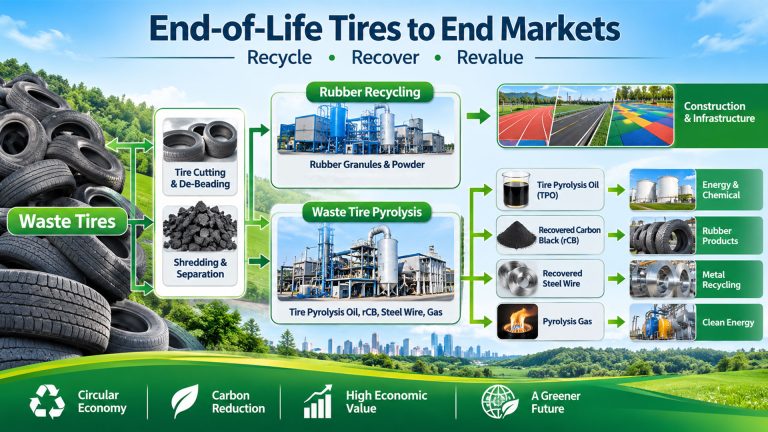
What Are the End Markets for End of Life Tire Recycling?
Globally, more than one billion tires reach the end of their service life every year. The management of these end-of-life tires (ELTs) is shifting from simple waste disposal toward a structured, circular supply chain. The end markets for end of life tire recycling are increasingly focused on high-value applications, including
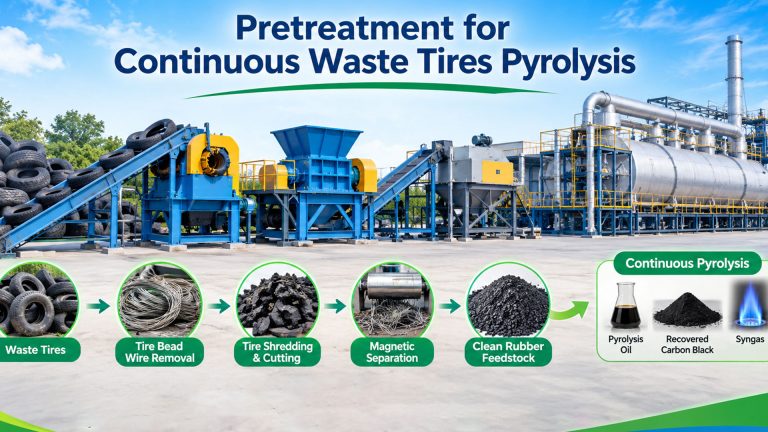
Why Is Pretreatment Necessary for Continuous Waste Tires Pyrolysis?
In waste tire pyrolysis projects, batch pyrolysis equipment can process whole tires, with the steel wire discharged alongside the pyrolysis residue. In contrast, continuous waste tires pyrolysis systems require the steel wire to be separated during the pre-treatment stage. This is a key design principle essential for ensuring the long-term,
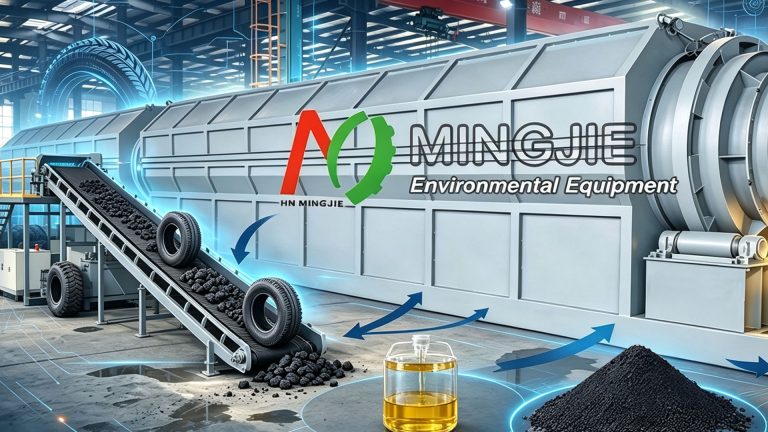
Fully Continuous Tire Pyrolysis Solution
The fully continuous tire pyrolysis system establishes a complete industrial chain, spanning raw material pre-treatment and high-temperature pyrolysis to the high-value deep processing of end products. It centers on a continuous rotary kiln, operating under slight negative pressure with indirect, oxygen-free heating. This configuration enables continuous feeding, pyrolysis, and residue
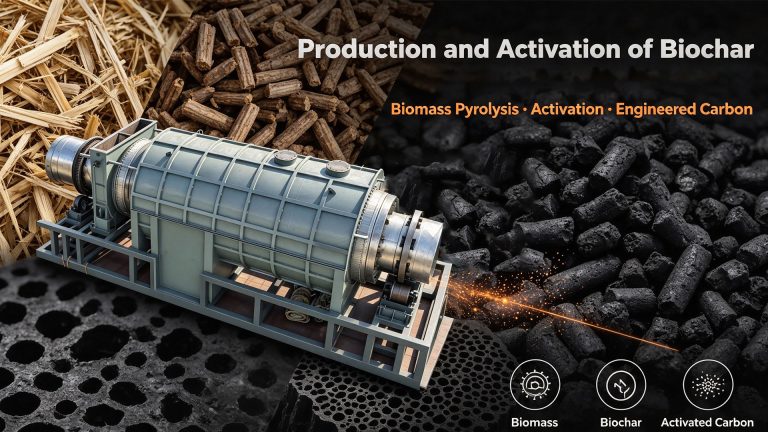
How to Achieve the Production and Activation of Biochar
The production and activation of biochar are two closely related yet distinct stages. Biochar is a carbon-rich solid material derived from biomass feedstock through pyrolysis and carbonization. Due to its limited porosity and insufficient active sites, biochar often fails to meet the characteristics required of activated carbon. The activation of
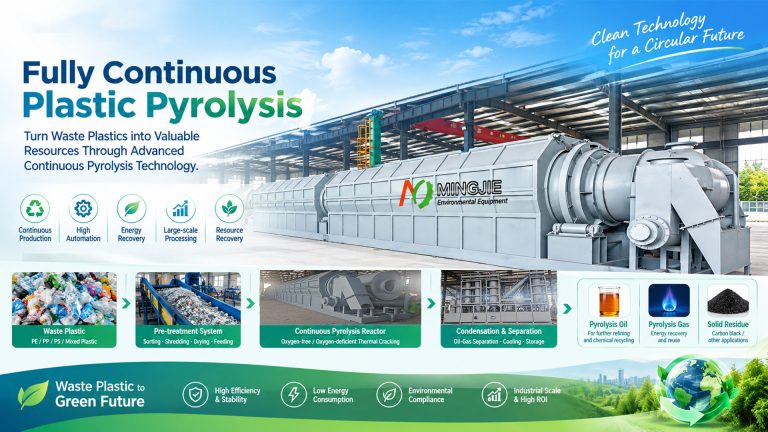
What is Fully Continuous Plastic Pyrolysis?
Fully continuous plastic pyrolysis refers to an industrial-scale pyrolysis process in which the entire operation runs on a continuous basis. This process encompasses the feeding of waste plastics, the pyrolysis reaction, the recovery and utilization of syngas, the collection of pyrolysis oil, and the discharge of solid residues. Fully continuous
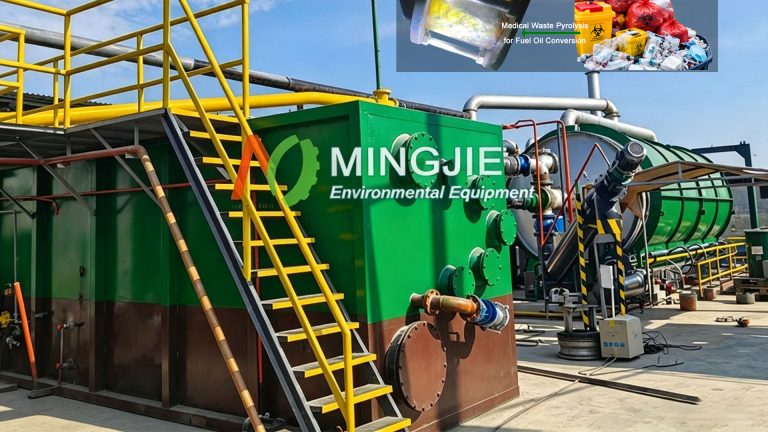
Medical Waste Pyrolysis Technology for Fuel Oil Conversion
Pyrolysis, a thermochemical conversion process under limited or anaerobic conditions, offers a promising pathway for waste-to-fuel conversion. Medical waste pyrolysis technology can safely sterilize solid waste at high temperatures, while breaking down organic components into pyrolysis oil, syngas, and carbon black. For pyrolysis equipment, medical waste is no longer a